

ULTRASONIC INSPECTION OF COMPOSITES
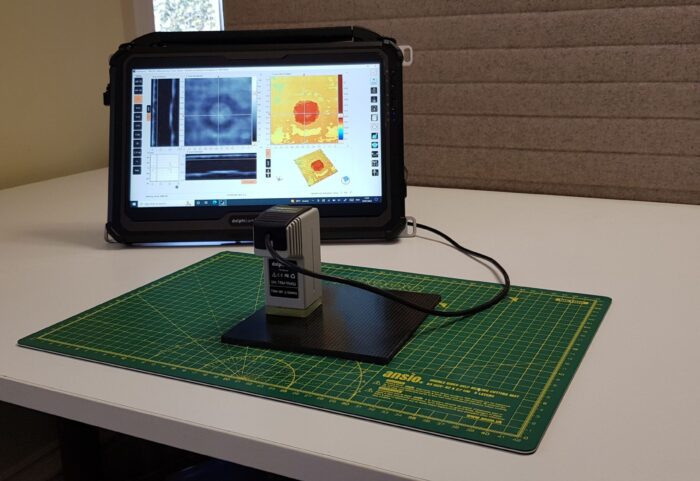
Composites non-destructive testing (NDT) is essential for verifying the strength and integrity of CFRP, GFRP, and other composite materials without damaging the very components being inspected. The dolphicam2 is designed for composites NDT across a wide range of materials, including Carbon Fibre Reinforced Polymers (CFRP), Glass Fibre Reinforced Polymers (GFRP), metallics, and bonded structures. What makes Dolphitech unique is our core technology, Matrix Array Ultrasonic Testing (MAUT), the most powerful and data-rich composite NDT equipment on the market, giving operators the unrivalled ability to view a material’s internal features with live C-Scans. Servicing Aerospace, Defense, Energy (wind and power generation), Space, Marine, and Automotive, the dolphicam2 is designed for composite inspection and is unrivalled in its capabilities.
WHAT ARE COMPOSITES MATERIALS?
Composite materials are specially engineered by combining two or more distinct materials with significantly different physical or chemical properties. This combination results in a composite with unique characteristics that differ from its individual components. The most common types of composites are fibre-reinforced polymers (FRP), which include materials like carbon fibre (CFRP) and glass fibre (GFRP). Given the widespread use of composite materials, Non-Destructive Testing (NDT) has become essential for detecting flaws, assessing structural integrity, and maintaining safety standards.
Common examples of composite materials include:
- Fiberglass: Made from fine glass fibres embedded in a resin matrix, fiberglass is widely used in boat hulls, automotive bodies, wind turbine blades and sports equipment due to its lightweight and high strength.
- Carbon Fibre Composites: Known for their exceptional strength-to-weight ratio, carbon fibre composites are extensively used in aerospace, automotive, and high-performance sporting goods. For instance, the Boeing 787 Dreamliner and Airbus A350 both use carbon fibre composites for the fuselage and wings, significantly reducing weight and improving fuel efficiency.
- Kevlar: A high-strength synthetic fibre, Kevlar is used in bulletproof vests, helmets, and other protective gear. Its lightweight and high tensile strength make it ideal for personal protection and military applications.
What Defects Can Composite NDT Detect?
Composite NDT with the dolphicam2 can detect a wide range of defects depending on material type and construction. Across CFRP and GFRP composites, this includes delamination, debonding, porosity, voids, impact damage, cracking, and foreign object debris (FOD) in composites.
GFRP components, such as wind turbine blades and marine structures, benefit from inspections that look for porosity, debonding and delamination through impact or fatigue. Defects that are often invisible on the surface (BVID) but can significantly compromise structural integrity.
Thick CFRP used in marine spars and similar structures can also be assessed for delamination, impact damage, corrosion, erosion, and voids using the same composite NDT platform.
WHERE CAN YOU USE MAUT?
Use our quick reference table below to see the typical types of features that can can be detected depending on the construction of your assets.


CASE STUDIES


What is composites non-destructive testing?
Composites non-destructive testing (NDT) is the process of inspecting composite materials, such as CFRP and GFRP, for internal defects without cutting into, damaging, or altering the component being inspected. It’s essential for verifying structural integrity in industries like aerospace, automotive, marine, energy and defense.
What defects can NDT detect in composite materials?
Composite NDT can detect delamination, debonding, porosity, voids, impact damage, cracking, bondline defects, and foreign object debris (FOD), among other defects, depending on the material and construction of the component being inspected.
Which NDT method is best for composites?
Ultrasonic testing, particularly Matrix Array Ultrasonic Testing (MAUT), is widely considered one of the most effective methods for composite inspection, offering live C-Scan imaging and volumetric defect detection without the radiation safety requirements of radiographic testing.
Can composite materials be inspected without damaging them?
Yes. Non-destructive testing methods like ultrasonic inspection allow composite components to be fully assessed for internal defects without any need to cut, section, or otherwise damage the material, keeping the part usable while still confirming its integrity.

EXPERIENCE THE DOLPHITECH DIFFERENCE
See more with our innovative NDT technology
Send in a sample to see how dolphitech can reduce inspection lead times and enhance insights
Contact usREQUEST A QUOTE OR SUBMIT AN ENQUIRY
Need help with product information?
Get in touch with our experts for information or a quotation.